
Dead by Daylight Pinhead NFT: A 2026 Retrospective on a Messy Chapter
Pinhead's Dead by Daylight NFT sparked a 2021 controversy, forcing Behaviour Interactive to clarify no blockchain tech would ever enter DbD.
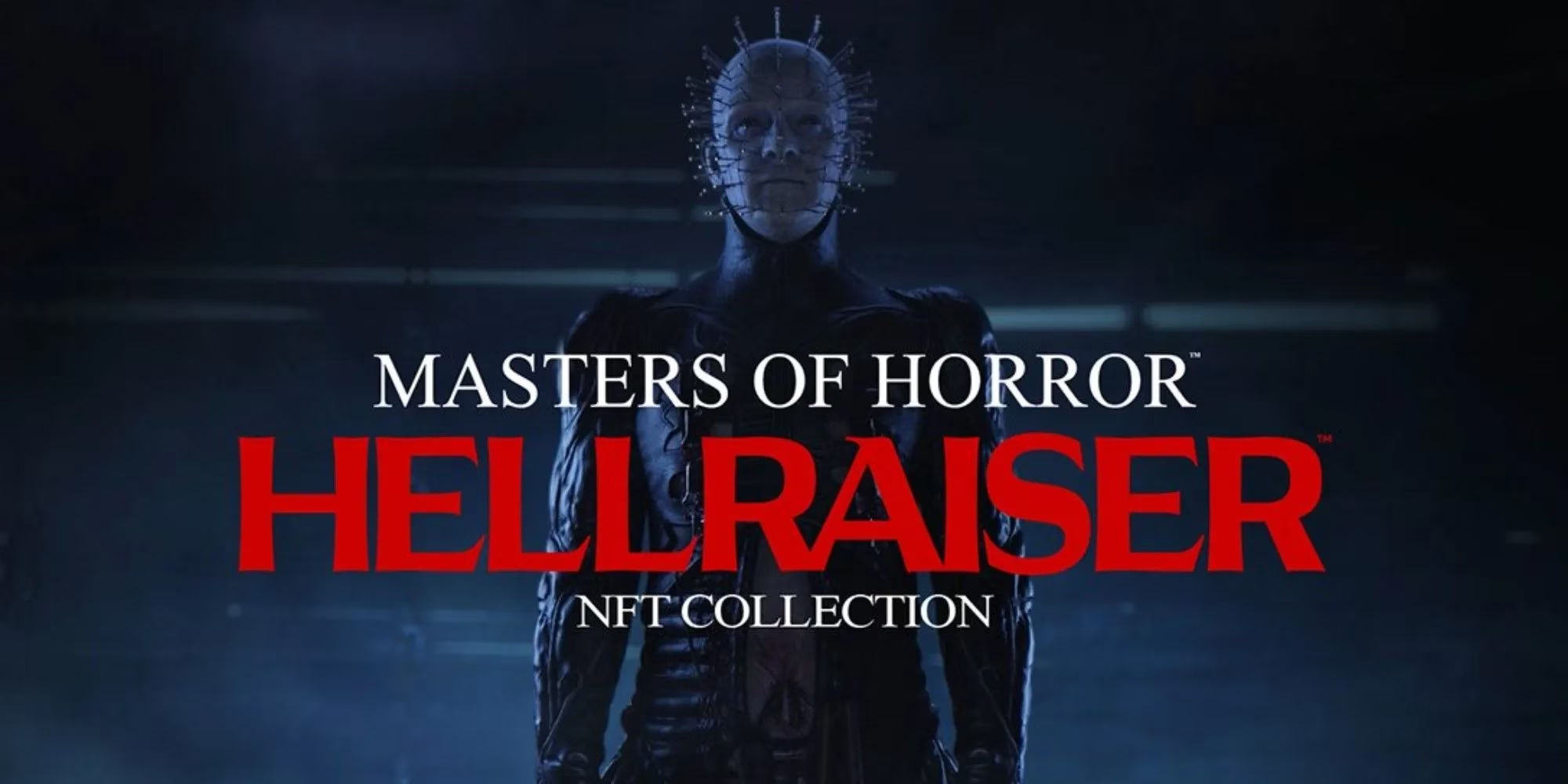
I still remember the exact moment I realized Pinhead from Dead by Daylight had been turned into an NFT. It was not a joke. It was not a fan mockup. It was real, and it was every bit as baffling as it sounds. Behaviour Interactive, Boss Protocol, and Park Avenue Entertainment had somehow joined forces to sell a digital token tied to Pinhead's in-game model. Not a skin. Not a charm. Not even a guaranteed copy of the Hellraiser DLC. Just a model. And a vague promise of extras.
If you are reading this in 2026, you might wonder why anyone cared. NFTs have lost most of their cultural shine. The idea of buying a blockchain receipt for a horror game character feels like a relic from a very strange timeline. But back in October 2021, this was a genuine controversy. Reddit threads exploded. Twitter arguments raged. Fans demanded answers. And Behaviour Interactive kept changing its story.
What Actually Happened? 🤔
After a week of rumors and a bizarre tweet that tried to preempt the backlash, Behaviour confirmed that yes, you could buy a Pinhead NFT using his in-game model from Dead by Daylight. The partnership involved Boss Protocol and Park Avenue Entertainment. Boss Protocol and NFT platform Moonwalk had announced something back in September, and the community spent weeks trying to piece together what it all meant. Nobody was quite sure. That uncertainty never really went away.
Behaviour's first public response sounded like it was washing its hands of the whole thing. The developer said that when it works with licensing partners, it provides them with in-game models and Chapter keys. Those partners are free to use them however they see fit as the rightful owners of the characters. On paper, that makes sense. In practice, it felt like a shrug. Fans wanted to know why a horror game about survival and dread was suddenly adjacent to a blockchain cash grab.
Then Behaviour posted another round of tweets that made things even murkier. The studio said it had worked with Boss Protocol over several months to adapt in-game models for use as NFTs and approved them before Pinhead released in DbD. It also described Boss Protocol and Park Avenue Entertainment as great partners. That is a strange thing to say when your community is furious. Maybe Behaviour's hands were tied. Maybe the licensing agreement left it with no final say. But a pat on the back for the partners does not land well when the collaboration is being roasted alive online.
Later, Behaviour gave a statement to TheGamer that was much clearer. The studio said it heard and understood the concerns raised by the community over NFTs. It also said: 'Absolutely zero blockchain tech exists in Dead by Daylight. Nor will it ever. Behaviour Interactive does not sell NFTs.' That is the line that mattered. If you were worried that DbD itself was about to become a crypto game, you could relax. The game was not. The NFT was a separate, licensed side thing.
The Voice Line Mystery 👻
One of the weirdest parts of this saga involved Pinhead's voice lines. When Pinhead first debuted in the asymmetrical horror game, some of his iconic lines from Doug Bradley were in the public beta. Then they vanished. They are still gone. Fans kept asking why. Naturally, people speculated that the lines were removed so they could be resold as an NFT. That theory spread fast because the timing was suspicious and the whole situation was already confusing.
Boss Protocol tried to shut that down. It added an FAQ to its website clarifying that no Dead by Daylight content was gated behind the NFT. The company did have Doug Bradley record lines just for its Hellraiser NFTs, but it said that was not the reason the lines were pulled. Do I believe that? I do not know. I am not sure anyone outside the licensing meetings knows. What I do know is that the explanation did not satisfy a lot of fans. When you remove content from a beta and then announce NFTs in the same universe, people are going to connect dots. Sometimes those dots are wrong. Sometimes they are not. Either way, trust takes damage.
The NFT Itself 💀
Here is the funniest part, and by funny I mean depressing. The actual NFT sounded useless. It did not lock exclusive Dead by Daylight items or skins. It may not even have guaranteed you a copy of the Hellraiser DLC. Boss Protocol's site described its Masters of Horror NFT as coming loaded with extras you would not be able to access anywhere else, including official merch, limited-edition signed items, and access to one-of-a-kind experiences. What does any of that mean? Who honestly knows. It is the kind of language that sounds impressive until you ask for specifics. Then it evaporates.
| What fans feared | What actually happened |
|---|---|
| Blockchain tech would enter Dead by Daylight | Behaviour said zero blockchain tech exists in DbD, and it never will |
| Exclusive skins would be locked behind NFTs | No DbD content was gated behind the NFT |
| The NFT would guarantee Hellraiser DLC | It may or may not have included a code |
| Pinhead's removed voice lines were being resold | Boss Protocol had Bradley record separate lines for Hellraiser NFTs, but denied that was why lines were pulled |
That table is basically the whole story. Fear, confusion, vague promises, and a developer trying to distance itself while also calling its partners great. It is a mess.
Why This Still Matters in 2026 🕰️
In 2026, the NFT boom is mostly a punchline. The market has cooled. The hype has faded. The people who spent absurd money on digital receipts are either quiet, embarrassed, or still insisting it was about the technology. Maybe some of them are fine. Maybe some of them made money. But for game communities, the Pinhead NFT remains a useful warning sign. It showed how quickly a beloved franchise can get dragged into something that has nothing to do with why people love it.
I think about Steam's NFT ban. I think about Neopets announcing it would join in on what ultimately just felt like a massive scam. I think about the person who spent $170,000 on a cat jpeg while the world burned. Some of us blow our discretionary income on overpriced coffee or a bad video game. That is at least a choice you can hold in your hands. An NFT is a promise wrapped in a receipt. It is not a Pinhead figure. It is not a poster. It is not even a good story, unless you enjoy watching a community argue with itself for weeks.
The Dead by Daylight community never fully agreed on who deserved the blame. Some people blamed Behaviour. Some blamed Boss Protocol. Some blamed Park Avenue Entertainment. Some blamed the entire concept of NFTs. I lean toward the last one. When a licensing partner owns the character, a developer may not have much control. But a developer can still communicate clearly. It can still warn players early. It can still avoid acting surprised when the backlash arrives. Behaviour eventually clarified that no blockchain tech would ever be in DbD. That was the right call. It just came after a lot of noise.
If you ever see a game franchise attached to an NFT in 2026, ask three questions. What do I actually own? Can it be taken away? Does the game itself need it? If the answers are nothing, yes, and no, you already know enough. You do not need a blockchain to tell you that. You do not need a limited-edition signed item. You do not need access to a one-of-a-kind experience that sounds suspiciously like a Zoom call with a stranger.
You can just play the game. Or not. That is the beauty of it.