
Dead by Daylight's Pyramid Head Design Critiqued by Original Creator, Sparks Discussion on Canonical Accuracy
Dead by Daylight and Pyramid Head spark debate on narrative authenticity, as Masahiro Ito suggests the White Hunter for better lore fidelity.
As of 2026, Dead by Daylight continues to stand as a dominant force in the online horror gaming landscape, maintaining a fervent player base and a prominent presence within streaming communities. The game's longevity is often attributed to its ever-expanding roster of iconic horror antagonists and survivors, drawn from a wide spectrum of beloved franchises. However, this very practice of incorporating licensed characters has occasionally led to nuanced discussions regarding authenticity and narrative fidelity. A notable instance of this emerged from comments made by Masahiro Ito, the original designer of one of the game's most visually striking killers.
The Creator's Perspective on Canonical Inconsistency
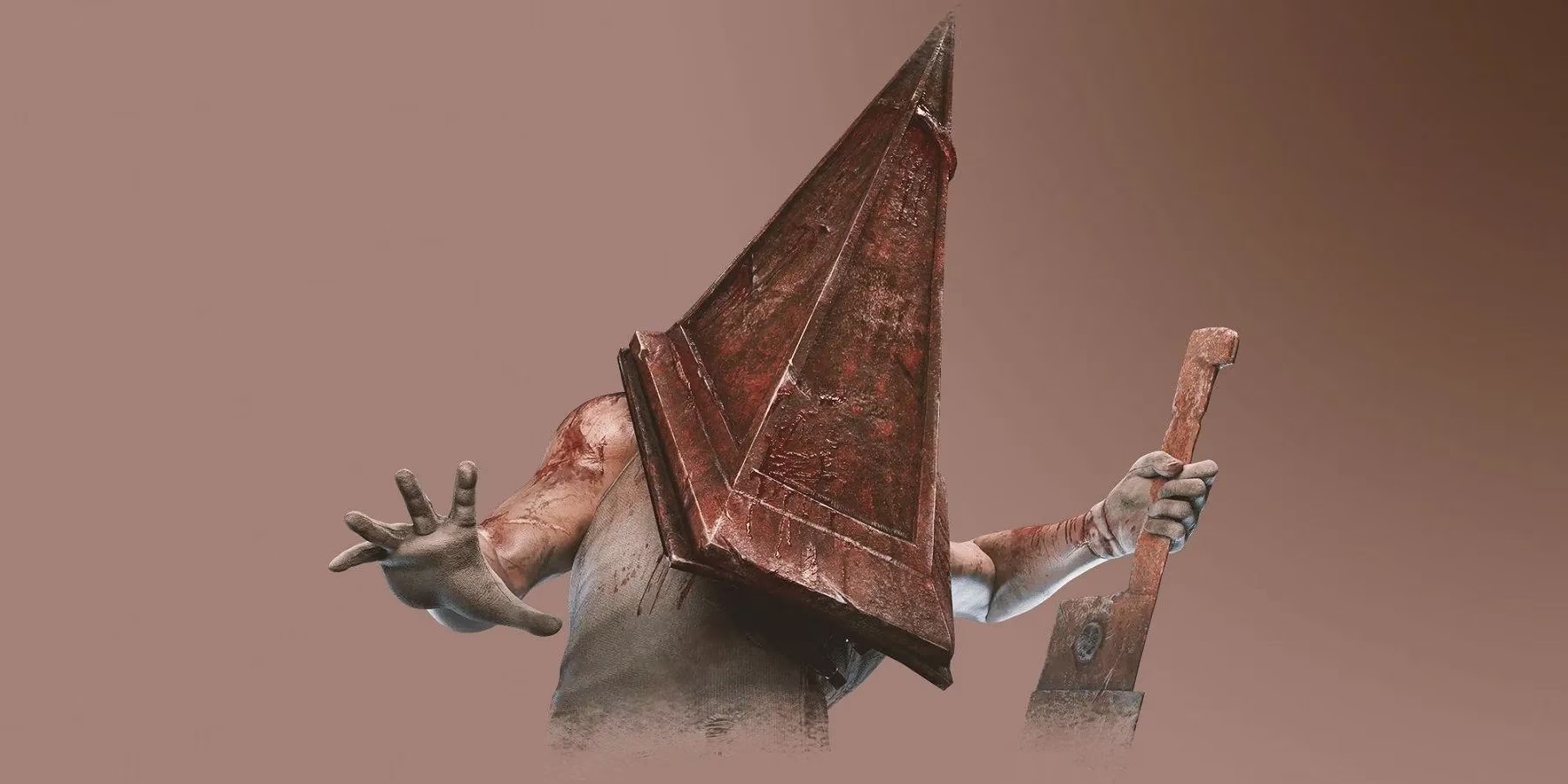
Masahiro Ito, the acclaimed artist behind the Silent Hill series, publicly expressed a critique regarding the implementation of Pyramid Head in Behaviour Interactive's asymmetrical horror title. Ito's central argument hinges on narrative coherence. He pointed out that the specific iteration of Pyramid Head featured in Dead by Daylight is the one from Silent Hill 2, a creature intrinsically tied to the protagonist James Sunderland's subconscious guilt and psychological torment. From a canonical standpoint, Ito contends that the presence of this particular manifestation is incongruous without James Sunderland himself being part of the game's environment or lore.
To address this perceived dissonance, Ito suggested an alternative. He highlighted the existence of another monster design from the Silent Hill universe known as the White Hunter. According to the creator, this entity would be a more appropriate and flexible choice for a non-canonical crossover, as it isn't exclusively bound to a single character's personal narrative. This distinction underscores a deeper conversation about how licensed properties are adapted into games like DbD, where gameplay mechanics sometimes take precedence over strict adherence to source material lore.
Community Reaction and In-Game Context
The Silent Hill antagonist, officially dubbed "The Executioner," was introduced to Dead by Daylight in 2020 and received an additional cosmetic variant in late 2025. The community's response to Ito's observations has been mixed but largely understanding:
-
Lore Enthusiasts agree with the logical inconsistency, appreciating the creator's attention to detail.
-
Gameplay-Focused Players often prioritize the killer's mechanics and visual design over narrative purity.
-
Many fans acknowledged that a texture alteration to more closely resemble the White Hunter would be a relatively minor change that could enhance canonical respect.
| Aspect | Current DbD Implementation (Pyramid Head) | Ito's Suggested Alternative (White Hunter) |
|---|---|---|
| Narrative Tie | Specific to James Sunderland (SH2) | More generic, less character-specific |
| Canonical Flexibility | Low | High |
| Potential Fan Reception | Mixed; some find it out of place | Likely viewed as a respectful adaptation |
Behaviour Interactive's Evolving Horror Crossover Strategy
This situation arises amidst Dead by Daylight's ongoing strategy of weaving a tapestry of horror legends. Following high-profile additions like characters from the Resident Evil saga, the game has solidified its reputation as a premier crossover platform. The studio's approach typically involves:
-
Securing licensing agreements with major horror IP holders.
-
Adapting the character's core identity into the DbD gameplay loop (Killer powers, Survivor perks).
-
Designing maps and cosmetics that evoke the source material's atmosphere.
While the team at Behaviour Interactive has not issued an official statement in direct response to Ito's 2026 critique, their historical pattern suggests they are receptive to community and creator feedback when implementing updates and new content. The question of whether they will modify The Executioner's design remains open. Such a change would be technically straightforward, likely involving a model reskin, but carries symbolic weight in terms of developer-creator collaboration.
The Future of Dead by Daylight and Its Legacy
The discussion around Pyramid Head highlights the balancing act required when managing a live-service game built on licensed content. As Dead by Daylight progresses, several key points define its trajectory:
-
📈 Sustained Popularity: The game's model of frequent updates, new chapters, and balance patches continues to engage its community.
-
🛠️ Developer Commitment: Despite the announcement of other projects like Meet Your Maker, support for DbD remains robust, indicating its status as a cornerstone asset.
-
🎭 Expanding the Roster: The pursuit of new horror icons is relentless, promising future crossovers that will inevitably spark similar discussions on adaptation and authenticity.
Ultimately, the critique from Pyramid Head's creator serves as a fascinating case study in the intersection of game design, intellectual property respect, and fan service. It reminds players and developers alike that behind every pixelated monster is a rich history and a creator's vision. Whether Behaviour chooses to act on this specific feedback or not, the dialogue itself enriches the community's appreciation for the horror genre's depth. Dead by Daylight's success lies not just in its gameplay, but in its ability to become a living museum of horror, where each addition, debated or celebrated, contributes to its enduring legacy.
Data referenced from Sensor Tower helps contextualize why live-service titles like Dead by Daylight keep leaning on recognizable licensed crossovers: sustained visibility and re-engagement are often driven by major content beats, cosmetic drops, and community discussion cycles that translate into renewed player attention across platforms.