
My Journey Through Dead by Daylight's Latest Transformations: A Player's Perspective on 2026's Evolving Landscape
Dead by Daylight's evolution showcases a meticulously balanced, feature-rich experience, with strategic map reworks and refined quality-of-life features enhancing gameplay.
As I logged into Dead by Daylight in 2026, I couldn't help but reflect on how far this terrifying playground has come. The game I first dove into years ago feels almost like a distant memory compared to the meticulously balanced, feature-rich experience it is today. Behaviour Interactive's commitment to evolution, rather than a sequel, has created a living, breathing world that constantly challenges and surprises me. I remember the March 2023 Developer Update being a major turning point, a signal that the developers were serious about refining the core experience for the long haul. That philosophy has only intensified, shaping the game I play now into its most polished and strategic form yet.
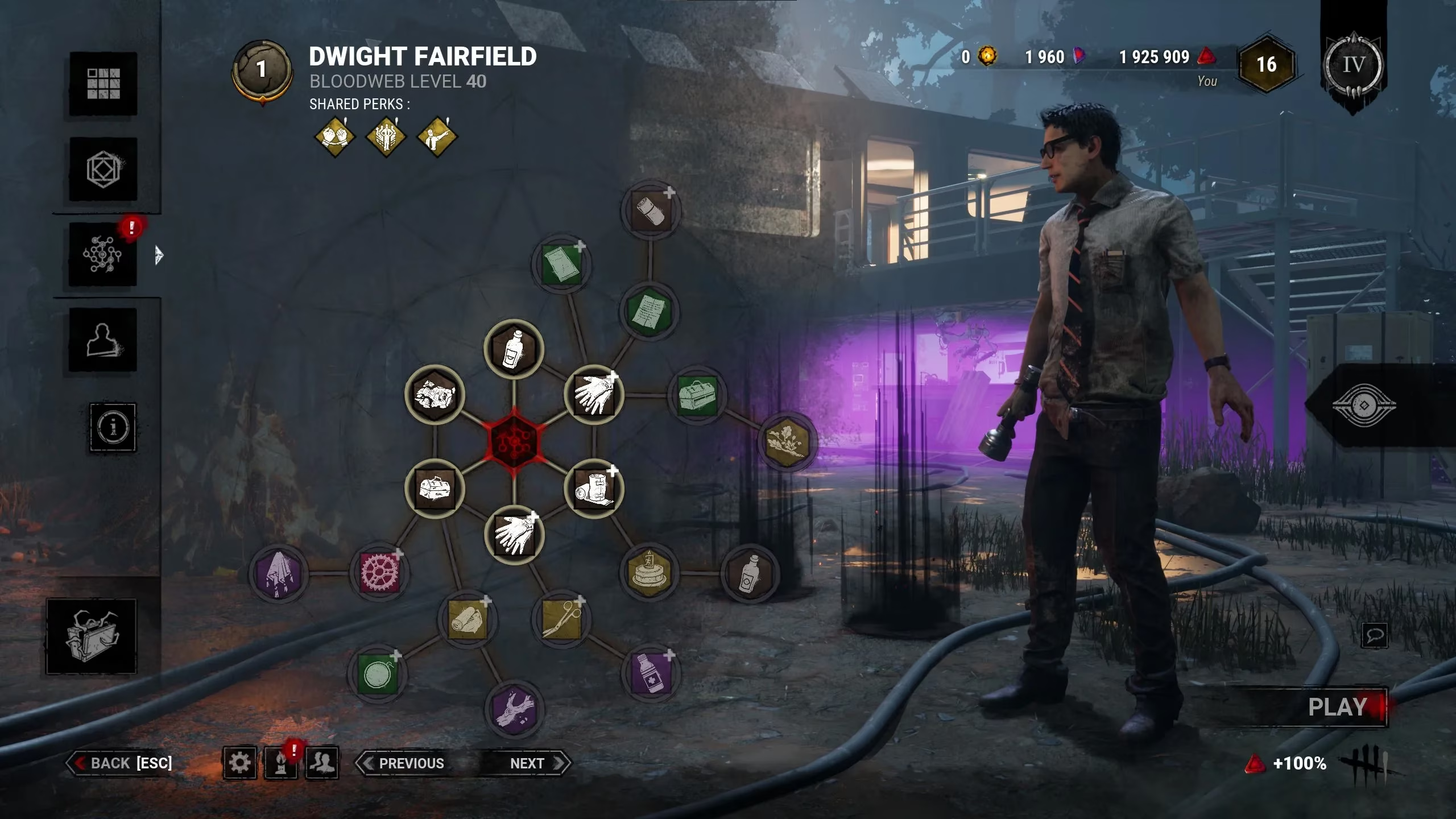
One of the most welcome persistent changes has been the continued refinement of quality-of-life features. That initial introduction of automatic Bloodpoint spending was just the beginning. Now, the system is incredibly sophisticated. I can set complex rules—like "only spend on characters above level 40" or "prioritize unlocking specific perk tiers." The old grind, which sometimes felt like a second job, has been streamlined into a satisfying progression loop. The accessibility options have also blossomed. What started as plans for hearing-impaired players has grown into a full suite of customisable visual and audio cues. I personally love the detailed terror radius visualiser, which can show not just proximity but the killer's current state (stealth, power-active, etc.), adding a thrilling new layer of information to chases.
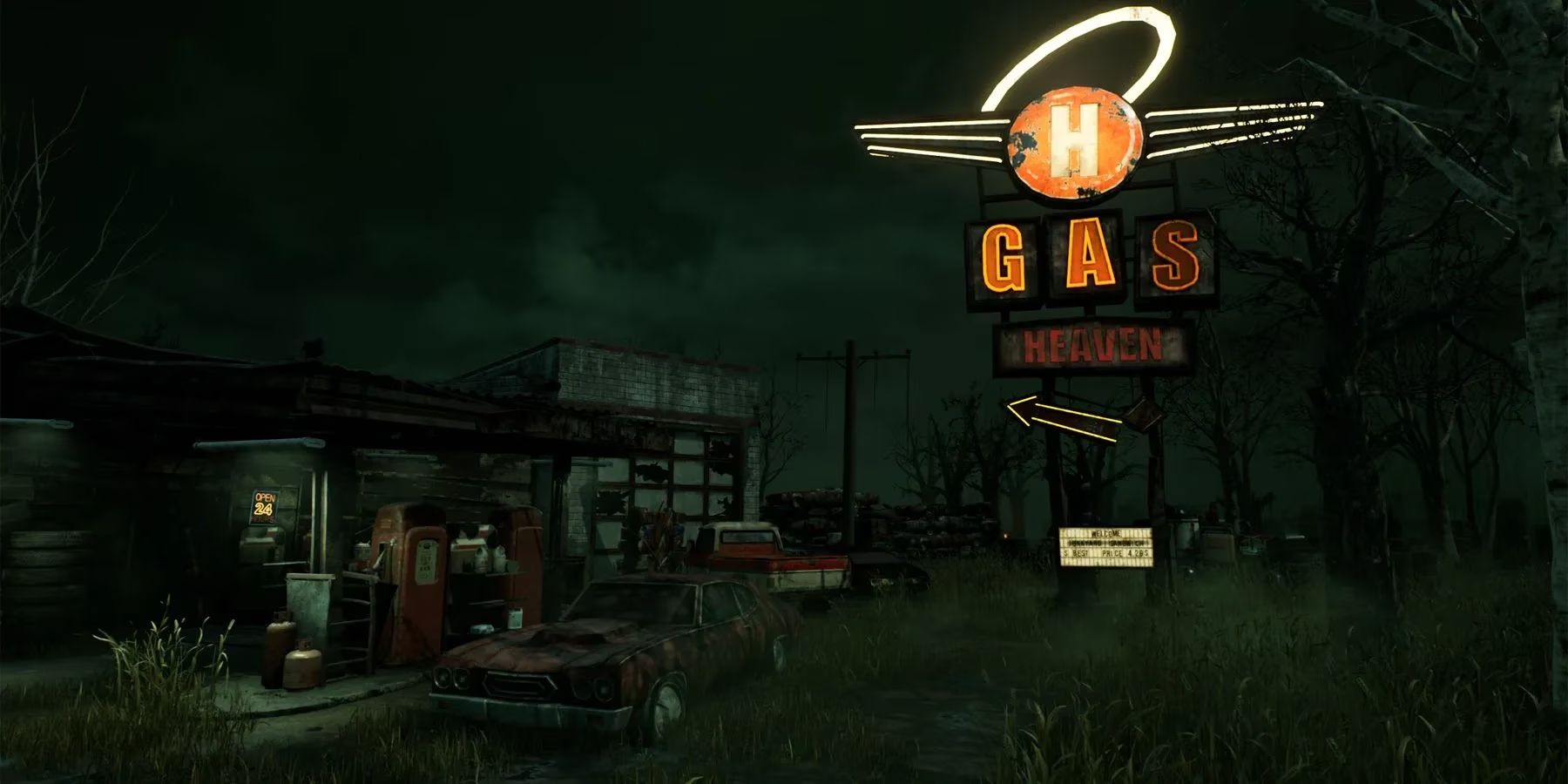
Of course, the heart of Dead by Daylight is the map design. The promised shake-up for Autohaven Wreckers was delivered and then some. It went from a map I sometimes dreaded to one of my favorites. The rework fixed the infamous unbalanced generator spawns and introduced more varied terrain and better pallet placement. This success sparked a whole 'Map Renaissance' project. In 2026, nearly every original realm has received a similar treatment. The Coldwind Farm maps, for instance, now have more breakable walls and less oppressive corn fields, making loops more interactive and less frustrating for both sides. Playing on a reworked map feels like discovering a new location, even if I've run through it a thousand times before.
The healing mechanic adjustment was a seismic shift that defined the meta for years. The initial nerf to healing speeds forced survivors, myself included, to completely rethink our playstyles. No longer could we rely on bouncing between hooks and heals with impunity. It made perks like Self-Care a calculated risk rather than a default, and it empowered killers who could apply consistent pressure. This change fundamentally reinforced the game's tension—resources became scarcer, and every health state mattered more. It paved the way for the more aggressive, perk-diverse killer builds we see today and made survivor teamwork an absolute necessity, not just a nice bonus.
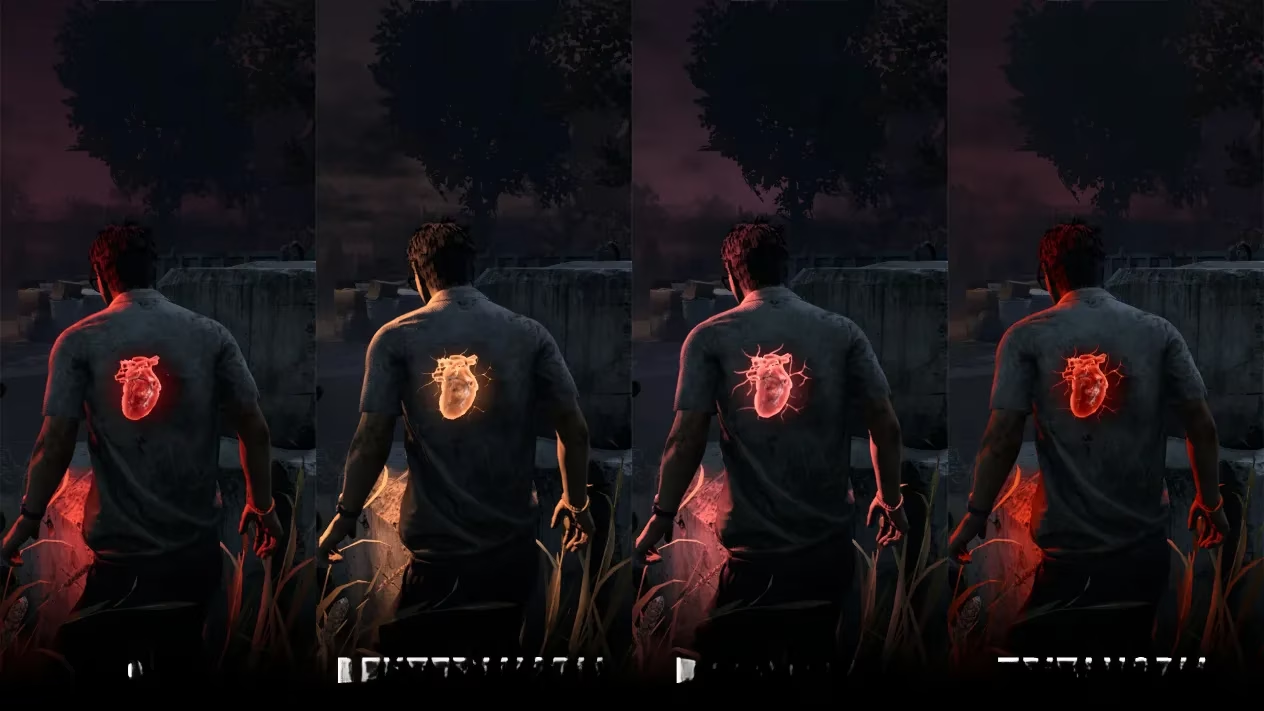
Then there were the killer-specific tweaks. I'll admit, I mourned the loss of flashlight saves against The Wraith and The Nurse initially. Blinding a Nurse mid-blink was a peak gaming moment. However, from the perspective of 2026, I understand the decision. Removing those interactions allowed Behaviour to balance those killers around their core power without the specter of a hard counter hanging over them. The Artist and The Hag became much more consistent and, in turn, more popular. This philosophy of removing 'cheese' tactics to enable clearer power balancing has continued. For example, certain infinite window loops were redesigned, and perks that created stalemates (like old Decisive Strike) were reworked into more interactive versions. The goal is clear: reward game knowledge and mechanical skill, not exploit mastery.
Looking at the current state of the game, the legacy of those early changes is undeniable. The perk ecosystem is more vibrant than ever. With the constant rebalancing, the 'meta' shifts seasonally. One month, a stealth build with Quick & Quiet and Dance With Me might be dominant; the next, a hyper-altruistic For the People and Buckley's Brown Sugar combo could take over. This keeps the game fresh. The developers have also embraced more radical mid-chapter updates, sometimes introducing experimental game modes or temporary rule sets to gather player data, which often leads to permanent positive changes.
The supporting features have grown immensely:
-
Custom Game Tools: Players can now create elaborate scenarios with modified rules, perfect for content creators and community tournaments.
-
Advanced Tutorials: New player onboarding includes interactive lessons on looping, killer power usage, and perk synergy.
-
Cross-Progression: Seamlessly switching between my PC and console is a dream come true, with all my hard-earned progress intact.
Playing Dead by Daylight in 2026 is a testament to the power of sustained, player-focused development. It's no longer just the game I play; it's a hobby with depth, community, and a constantly evolving skill ceiling. The journey from those 2023 update notes to today has been one of thoughtful iteration, sometimes painful balance, and ultimately, a stronger game for everyone in the fog. I can't wait to see what the next eight years bring. 🎮🔪