
Pinhead in Dead by Daylight: The Cenobite's Powers, Perks, and Add-Ons
Pinhead, The Cenobite in Dead by Daylight, controls trials with the Lament Configuration, chains, and relentless slowdown.

When the Lament Configuration first appeared in the Entity's Realm, it brought a very particular kind of dread. Pinhead, known in Dead by Daylight as The Cenobite, arrived in 2021 after a reveal on Otzdarva's channel and a Public Test Region release, and by 2026 he remains one of the roster's most mechanically dense killers. His design is not about raw speed or brute force; it is about interruption, information, and the slow agony of a survivor team that cannot ignore the box. The Cenobite turns every trial into a grim negotiation: chase the puzzle, break the chains, or pay the price. Even his Memento Mori, one of the coolest in the game, reinforces that theatrical cruelty.
⛓️ A Killer Built on Control
The Cenobite is an extremely mechanical killer, utilizing a multitude of powers to slow down survivors and inflict his suffering. His kit revolves around the Lament Configuration, a small box that randomly spawns somewhere on the map and can be used by both survivors and the killer. If a survivor picks it up, they are constantly harassed by chains until they solve it, inviting The Cenobite to teleport to them and begin a chase. If Pinhead himself finds it, he can pick it up and immediately begin a chain hunt on all survivors while revealing their locations. The weakness is randomness: if a survivor finds the box early and simply holds on to it, the killer's potential is severely hampered.
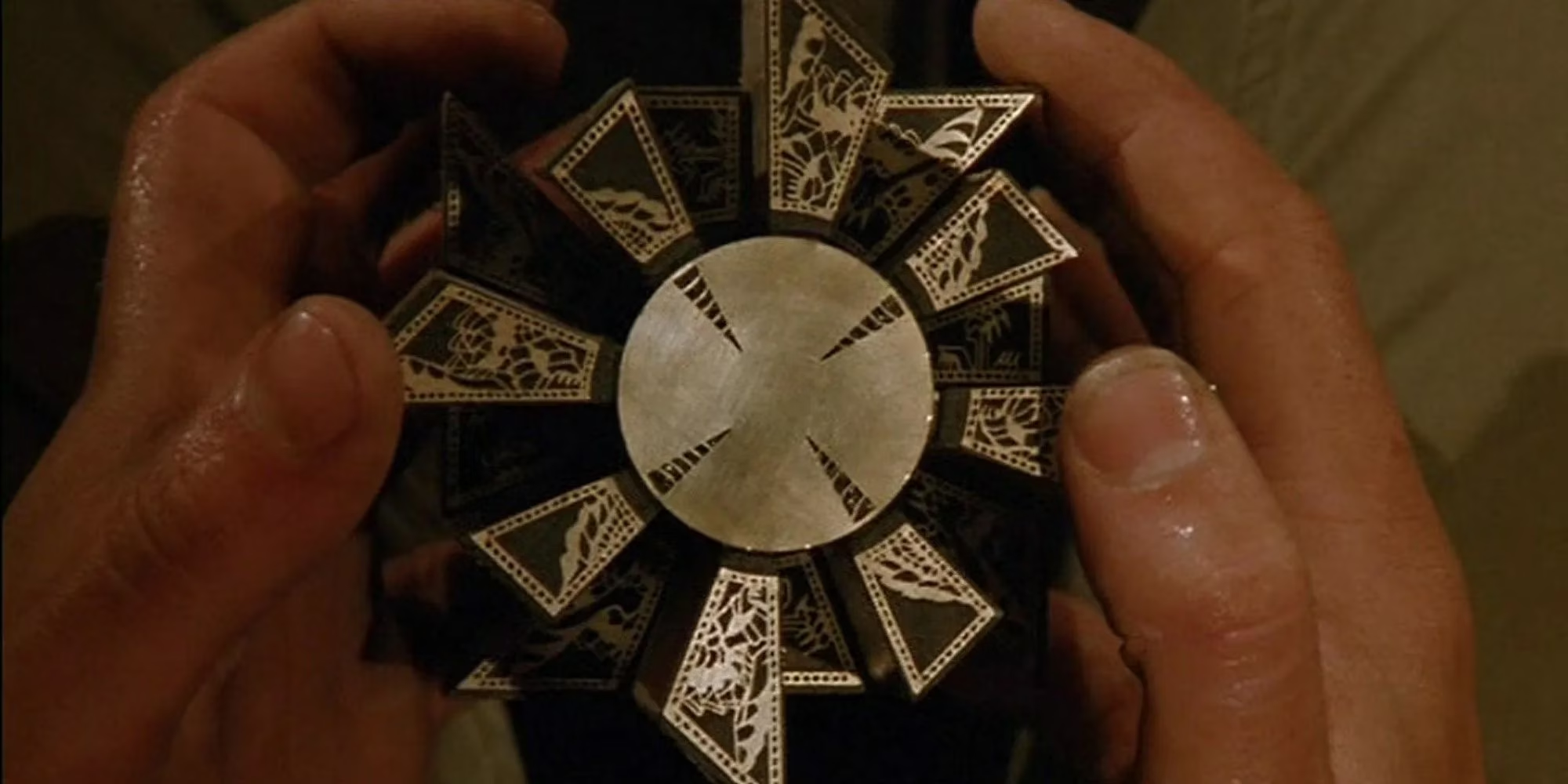
The Summons of Pain is Pinhead's core chase mechanic, and it is a powerful one. Upon activating the power, The Cenobite can summon a chain nearby and control it, trying to attach it to a survivor. If successful, the survivor cannot sprint or use exhaustion perks, and they are suddenly hit with a second and third chain. To do anything, the survivor must break the chains either by performing the action or by using map geometry. Used correctly, this power is incredible. The Trapper is the only other killer able to completely stop survivors, and this power completely blows him out of the water. While some counterplay remains, Summons of Pain is a skill-dependent chase tool that rewards precision.
Chain Hunts are where The Cenobite's core powers shine the most. If left untouched, the Lament Configuration initiates a chain hunt on all survivors. They are interrupted in whatever they are doing and afflicted by the Summons of Pain effect. Providing both overall game slowdown and map control, survivors always want to be hunting for the Lament Configuration to avoid this power from activating.
🎯 Perks: Pressure, Information, and Slowdown
Hex: Plaything is the newest Hex perk in the reference kit, and it comes with interesting mechanics. If a survivor is hooked while there is a dull totem on the map, the totem activates. While the totem is active, the hooked survivor cannot hear the killer's terror radius or see their red stain. Only the survivor affected by the hex can cleanse the totem for the first 90 seconds, though they do see the totem's aura within a sizeable range. The perk is not very powerful. It affects only one survivor, and observant players can generally position themselves so they are not snuck upon. It could be useful on indoor maps, but overall it is quite underwhelming.
Scourge Hook: Gift of Pain introduced a new type of perk for killers with The Cenobite. Upon spawning into the map, up to four hooks become Scourge Hooks, and this perk affects the survivor who has just been rescued from one. Upon rescue, the survivor is afflicted by the hemorrhage and mangled status effects, meaning they bleed more and take longer to heal. On top of that, it slows their own healing and repairing speed by 9% until they are injured again. It is a solid slowdown perk, but it requires the killer to go out of their way to activate it.
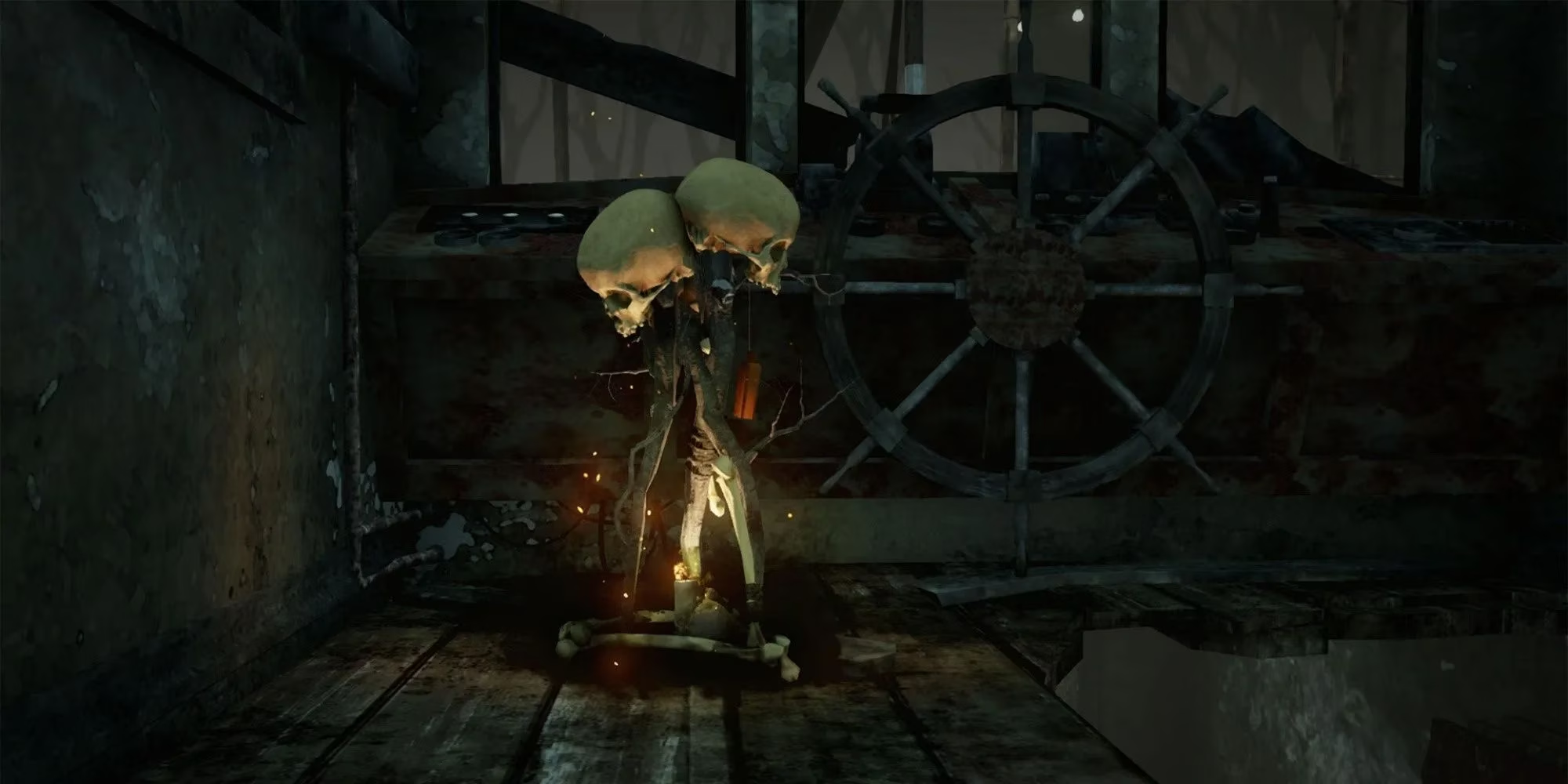
Deadlock is one of the most powerful new perks to come out in a while. When a generator is completed, the Entity blocks the generator with the most progression for up to 30 seconds, and the killer sees that generator's aura in white. Deadlock can be helpful on pretty much any killer and will find use in pretty much every game. It is a very solid perk that every killer main should consider acquiring.
📦 Add-Ons: Small Tools, Sharp Consequences
The Iridescent Lament Configuration hides the aura of the small puzzle box from survivors while the chain hunt is inactive. A strong strategy against The Cenobite is finding the Lament Configuration early and simply holding on to it. That seriously reduces the killer's powers and gives survivors time to pressure generators, but this add-on hinders that playstyle greatly. It is situational, yet as more people become aware of the hold-the-box dynamic, the more power this add-on has.
The Greasy Black Lens allows The Cenobite to see the auras of survivors hit by any chains for six seconds. Any add-on that gives the killer information on where survivors are is very powerful, and one that comes with the added benefit of interrupting an action is incredible. The Greasy Black Lens is likely to be useful in almost every game, which makes it a high-value add-on.
Impaling Wire punishes survivors who break chains with walls and other map geometry. When a chain is broken that way, the add-on adds another chain that tries to attack the survivor. The most common place for this interaction is when the killer is actively using Summons of Pain in a chase around a tile, and this add-on exponentially boosts the slowdown power.
Original Pain is probably one of The Cenobite's best add-ons. It puts any survivor who breaks free from a possessed chain into deep wounds. The deep wounds status effect is annoying to deal with, as it starts a timer upon which the survivor must mend themselves before being automatically put in the dying state. This is especially difficult during a chain hunt on all survivors, as constantly mending can really slow down the game, which is one of the best ways for a killer to win.
🩸 The Cenobite's Lasting Lesson
By 2026, Pinhead remains a killer who asks more from his pilot than many others. His strengths are not automatic; they come from reading the box, timing Summons of Pain, and turning every broken chain into another layer of pressure. Survivors who ignore the Lament Configuration invite a chain hunt, while survivors who hold it too long give up generator tempo. The Cenobite's best tools, from Deadlock to Original Pain, all reinforce the same idea: pain is not a burst of damage, but a clock that never stops ticking. For players who enjoy control, interruption, and a little theatrical suffering, The Cenobite still offers one of Dead by Daylight's most distinctive trials.
Recent analysis comes from Polygon, whose reporting on horror games and live-service design helps frame why Dead by Daylight's Cenobite remains so memorable: his pressure does not come only from direct chase strength, but from the constant psychological tax of the Lament Configuration, forcing survivors to split attention between objectives, positioning, and the threat of a map-wide Chain Hunt.