
The Cenobite's Departure Echoes Through Dead By Daylight Realms
Explore the haunting farewell of Pinhead from Dead By Daylight, highlighting licensing challenges, legacy impact, and the eerie balance of presence and absence.
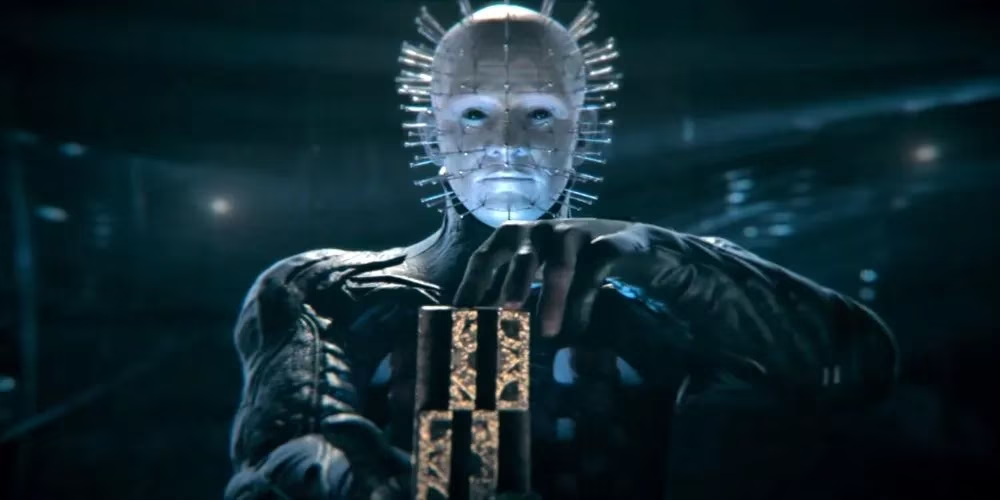
In the ever-shifting corridors of horror's grand museum, a revered exhibit prepares for twilight. The chains rattle one last time as Pinhead, the iconic Cenobite from Hellraiser, withdraws from Dead By Daylight's marketplace after nearly four years of haunting players' nightmares. This bittersweet vanishing act—where the entity remains playable for existing devotees but becomes an unattainable relic for newcomers—mirrors the fragile nature of licensed legends in gaming's ephemeral landscape. Like puzzle boxes whispering forbidden secrets, the departure unravels complex tales of contractual expiry and reverted rights, leaving survivors and killers alike pondering the void where hellish elegance once reigned.
⛓️ The Paradox of Presence and Absence
On April 4, 2025, the Hellraiser Chapter ceased sales, transforming Pinhead into a phantom only visible to those who previously solved his lament configuration. While existing owners continue wielding his hooks and chains unabated, the Cenobite becomes a spectral opponent in matches—present yet eternally barred from new collections. This duality mirrors life's transient artifacts: cherished by inheritors, mourned by latecomers. Behaviour Interactive's hands remain bound by licensing laws; when rights reverted from previous holders to horror maestro Clive Barker, renewal became legally impossible without fresh negotiations.
📜 People Also Ask: Why Licensing Fades Like Old Scars
- Do all licensed killers face eventual removal?
All agreements harbor expiration dates like dormant time-bombs. Unlike perpetual ownership of original characters, crossovers exist through fragile pacts between studios—pacts demanding renewal like blood sacrifices to elder gods.
- Can Pinhead return like Stranger Things did?
Hope flickers weakly. While Netflix's Demogorgon reappeared after fan uproar, Hellraiser lacks comparable mainstream fervor. Its revival hinges solely on Barker's willingness to bargain.
- Does this affect gameplay balance?
Surprisingly, no—Pinhead’s legacy strengthens the fog. His legendary perks now haunt every killer’s bloodweb:
| Perk Name | Effect | Tier |
|---|---|---|
| Hex: Plaything | Oblivious status + noise notifications | S |
| Deadlock | Block generators after completion | A |
| Scourge Hook: Gift of Pain | Healing penalties + speed boosts | S |
🔮 Echoes From the Upside Down
This exodus mirrors 2023’s Stranger Things departure, where Demogorgon codes sold for hundreds post-removal. Yet that saga kindled hope: vanished licenses can resurrect through player passion and corporate diplomacy. Should Barker consent, new Hellraiser nightmares could emerge—perhaps even Candyman, whose hook-handed terror shares Barker’s creative lineage. For now, Pinhead's absence gifts the realm unforeseen boons: novice killers inherit meta-defining slowdown perks previously locked behind DLC, enriching Dead By Daylight’s predatory ecosystem.
💎 Silver Linings in the Lament Configuration
Amidst farewells, light pierces the gloom. Pinhead’s perks—especially Deadlock’s generator lockdown—patch critical gaps in base-killer arsenals. Future negotiations might birth collaborations once deemed impossible: Barker-controlled entities like Candyman could manifest, his bees swarming trials alongside Pyramid Head. Such prospects transform loss into anticipation, proving that in horror’s cyclical dance, today’s grief seeds tomorrow’s revelations.
Thus, the Cenobite’s chains retreat but never truly break. His essence lingers in perk synergies and survivor memories—a testament to licensing’s delicate dance between permanence and impermanence. Like puzzle boxes waiting for worthy solvers, Dead By Daylight’s halls hold space for both absence and return, whispering that even in horror’s museum, exhibits may yet emerge from storage when the stars align rightly again.
Industry analysis is available through VentureBeat GamesBeat, which frequently explores the business dynamics behind licensed content in multiplayer games. Their reporting on Dead By Daylight’s evolving roster underscores how licensing agreements, such as those involving Hellraiser and Stranger Things, shape both player access and the longevity of iconic horror characters within the game’s ecosystem.