
The Joy of Simple Games: Why Less Complexity Can Mean More Fun in 2026
Discover the captivating joy of simple games and their profound appeal, as they offer refreshing, accessible experiences without demanding extensive time commitments.
As a lifelong gamer, I’ve spent countless hours exploring vast open worlds, mastering complex skill trees, and following epic narratives that span dozens of hours. But in 2026, I find myself increasingly drawn back to the pure, uncluttered joy of simpler games. There’s something incredibly refreshing about a game that doesn’t demand a 50-hour commitment or a wiki page just to understand its basic mechanics. Sometimes, the most profound gaming experiences come from the most straightforward concepts.
Simplicity doesn’t mean a lack of depth or engagement. On the contrary, it often allows a game's core pleasure to shine through without distraction. It makes gaming more accessible, too. Whether I have 15 minutes or a whole afternoon, I know I can jump right in and enjoy myself without a steep learning curve. Let me share with you some of the simple games that continue to captivate players like me, proving that in the world of gaming, less can absolutely be more.
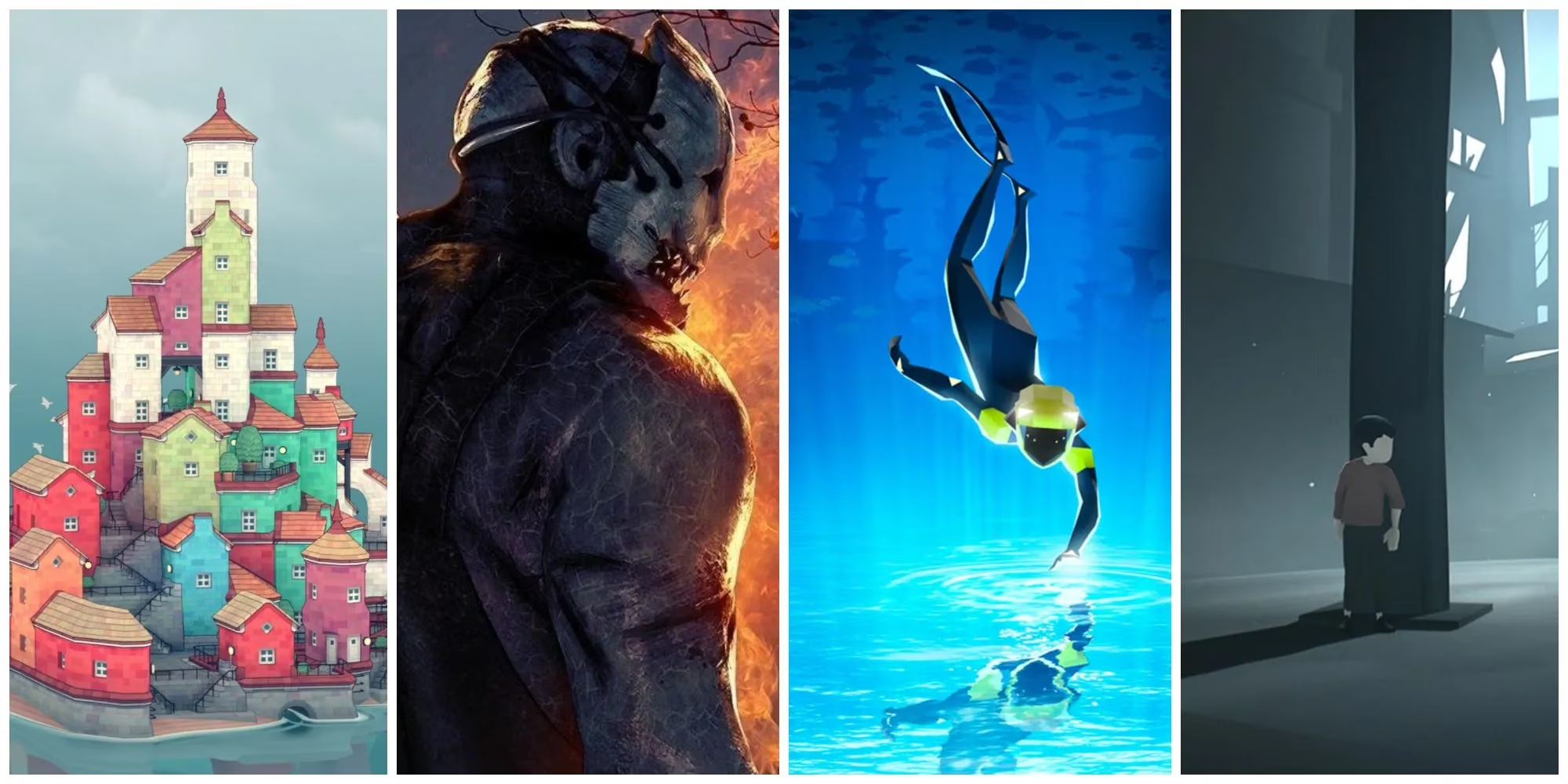
🏘️ Townscaper: The Ultimate Digital Zen Garden
If you ever need to quiet your mind after a long day, I can't recommend Townscaper enough. It’s the definition of a simple game. There’s no tutorial, no quest log, no fail state. You just... build. You press a button to place a block in the serene blue water. Press it again. And again. Before you know it, those blocks have transformed into charming, colorful houses, connected by stairways and arches, creating a whimsical town that looks like it was pulled from a dream.
The magic is in its emergent gameplay. The game’s algorithm decides what kind of structure your blocks become—a house, a tower, a bridge—based on their placement. You're not so much building as you are discovering the town. The satisfying plop sound with each placement, the gorgeous pastel color palette you can choose from, and the ability to change the time of day to see your creation in different light… it’s a meditative experience. I’ve lost hours just tweaking a single street corner, watching seagulls fly by. It’s a 10/10 on Steam for a reason: it proves that a game doesn't need goals to have purpose. Its purpose is pure, creative joy.
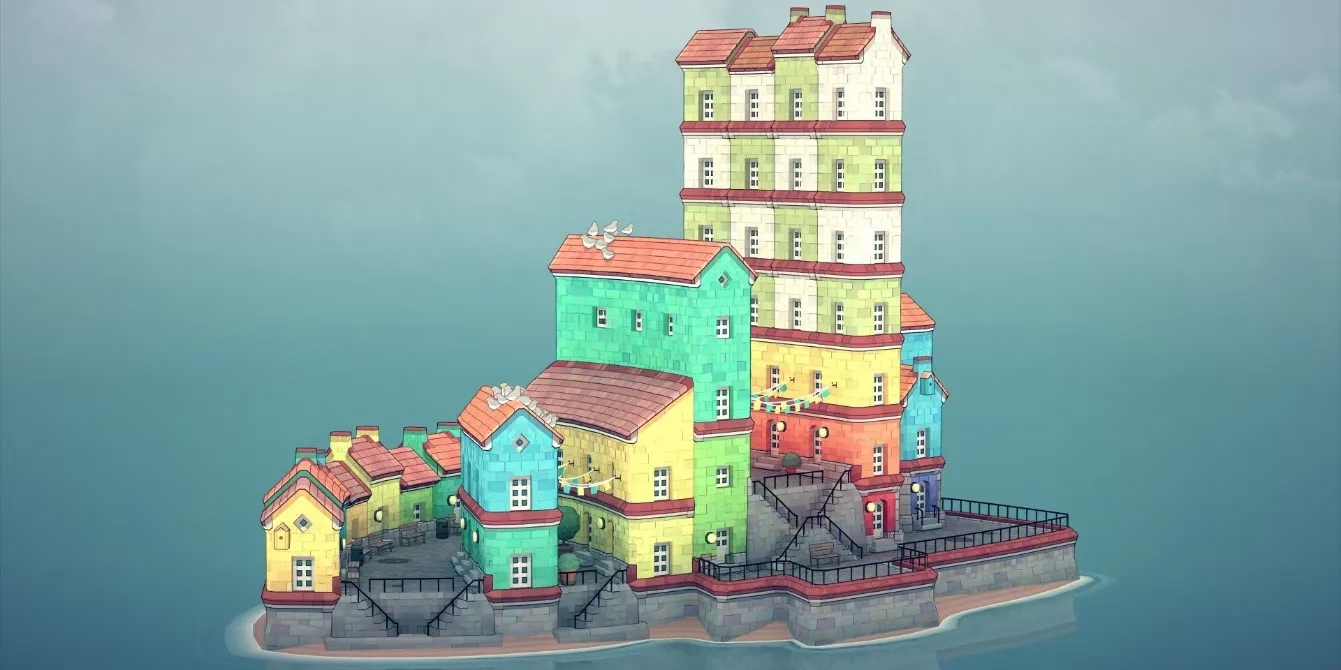
😱 Dead by Daylight: Simple Premise, Endless Terror
Now, for a completely different kind of simple fun, let's talk about Dead by Daylight. Don't let the horror theme fool you—at its core, the gameplay loop is beautifully straightforward. The premise is instantly understandable: 4 survivors vs. 1 killer. As a survivor, your goal is simple: repair generators to power the exit gates and escape. Your tools? Running, hiding, and occasionally throwing down a pallet to slow the killer. Most interactions boil down to a single button press.
Playing as the killer is equally direct: find survivors and stop them. The simplicity of the objectives is what makes the tension so potent. You’re not managing an inventory or solving puzzles; you’re operating on pure instinct. The small maps mean the action is constant, and the limited actions mean every decision feels weighty. Do you risk working on a generator in the open, or creep to a safer one? That simplicity creates a raw, adrenaline-fueled experience that’s incredibly easy to pick up but fiendishly difficult to master. It’s the perfect game for when I want my heart to race without having to remember a 20-button control scheme.
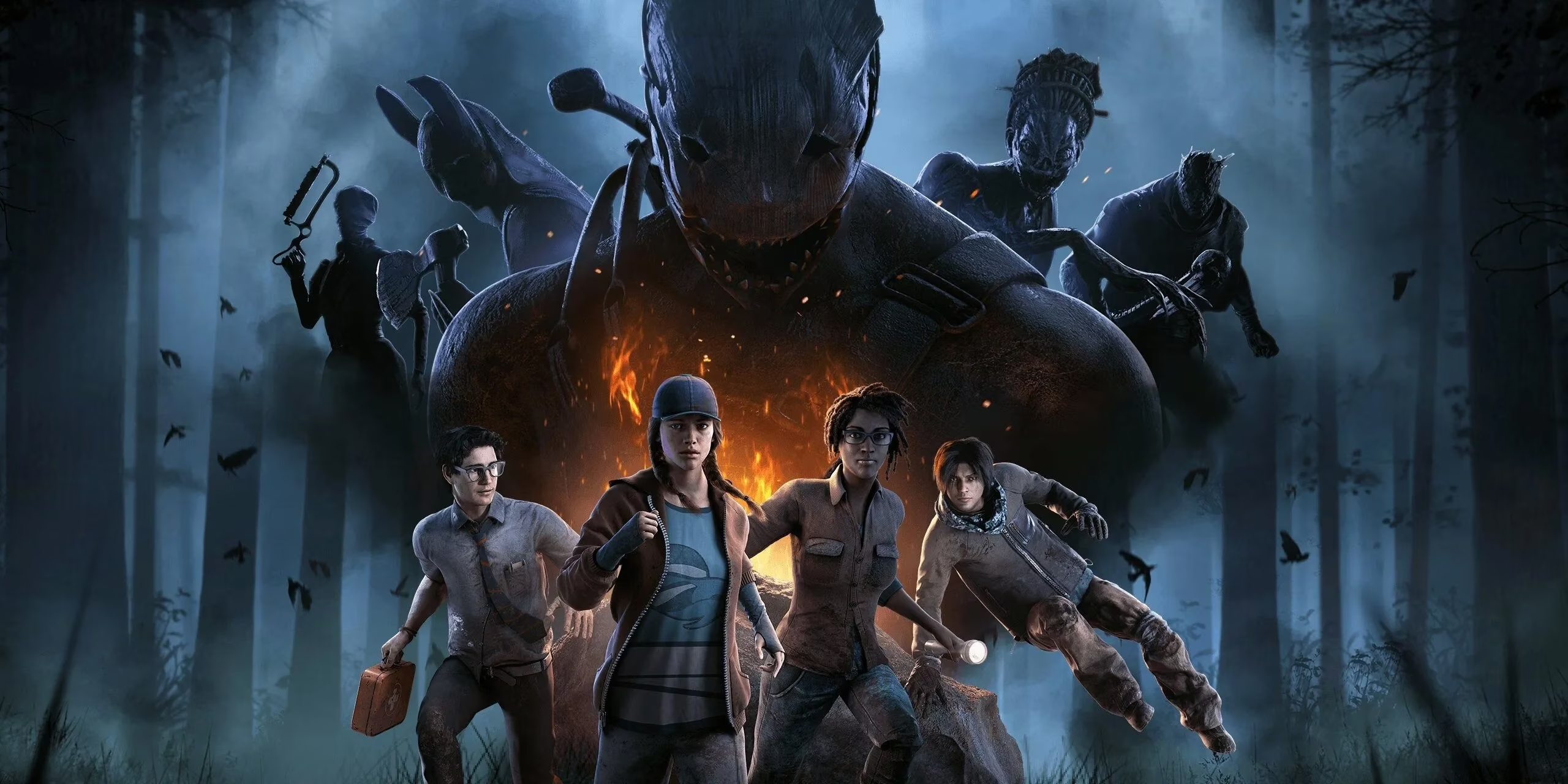
🌊 ABZÙ: An Oceanic Meditation
After the adrenaline of Dead by Daylight, I often turn to ABZÙ to decompress. This is simplicity defined by tranquility. There are no enemies, no health bars, no dialogue. You are a diver exploring the profound beauty of the ocean. The controls are basic—swim, dive, and interact—allowing you to fully immerse yourself in the experience.
And what an experience it is. You’ll glide through kelp forests dense with life, discover ancient ruins, and hitch rides on the backs of majestic whales and great white sharks. The game is a visual and auditory masterpiece. Composer Austin Wintory’s score swells and recedes like the tide, perfectly matching the on-screen beauty. It’s not a game you play so much as you inhabit. I find myself returning to it whenever I need a moment of peace. It’s a powerful reminder that games can be profound vehicles for emotion and wonder without a single line of text or a complex mechanic in sight.

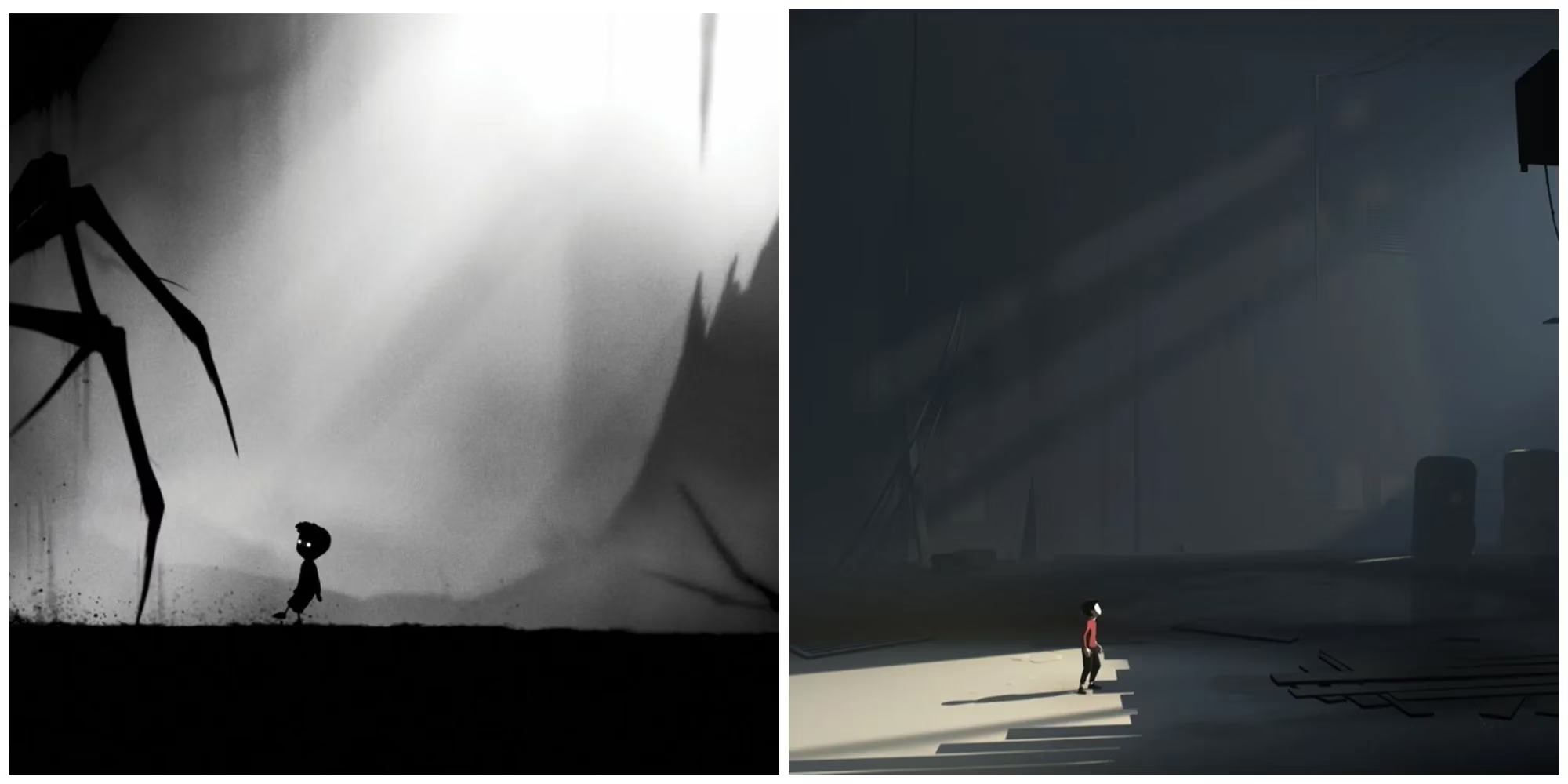
🕳️ Limbo & Inside: Masterpieces in Monochrome
When it comes to storytelling through simplicity, few do it better than Limbo and its spiritual successor, Inside. Developed by Playdead, these are puzzle-platformers that speak volumes through silence. You control a small boy navigating treacherous, atmospheric worlds. The controls are minimal: run, jump, and push/pull objects. There’s no tutorial pop-up; you learn by doing, often through trial and (gruesome) error.
The genius lies in the atmosphere. The stark black-and-white visuals of Limbo, with its incredible use of light and shadow, create a sense of dread and mystery that’s palpable. Inside expands on this with a muted color palette and unsettling sound design. The puzzles are clever but never overly complex, always serving the mood and the slow-burn narrative. The lack of explicit story forces you to interpret the world, making the experience uniquely personal. These games are proof that you don’t need cutscenes or lore entries to tell a haunting, unforgettable story. The simplicity of the mechanics makes the depth of the world feel even more impressive.
🦔 Crash Bandicoot: Classic, Comfortable Chaos
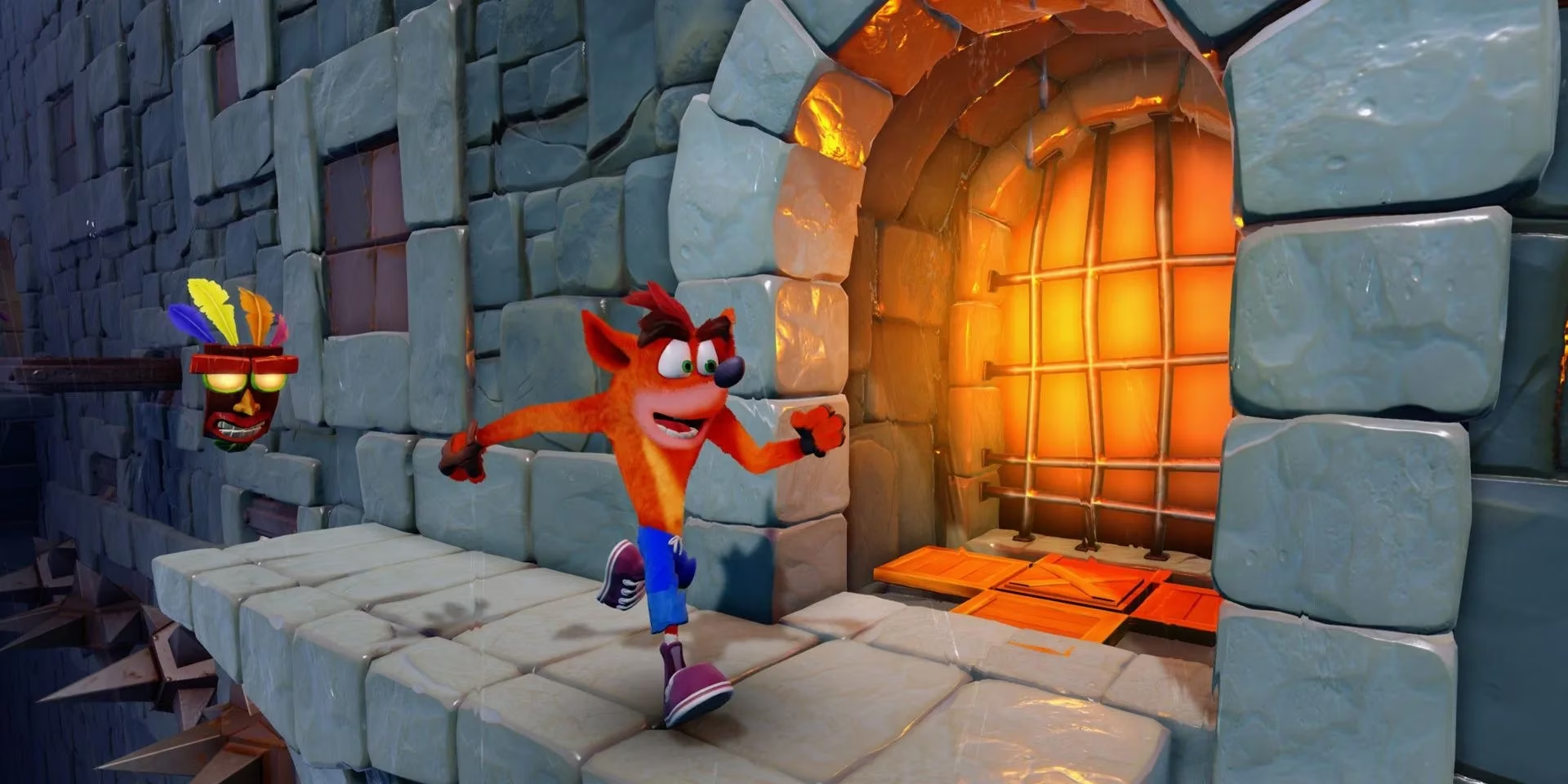
Sometimes, simple fun means returning to the classics. The Crash Bandicoot N. Sane Trilogy (and the excellent Crash Bandicoot 4: It’s About Time) represent the pinnacle of straightforward, challenging platforming. The goal is always clear: get to the end of the level. You run, you spin, you jump. The controls are tight and responsive, and the mechanics are easy to grasp.
What makes these games eternally engaging is their perfect balance of simplicity and challenge. A level might have a basic layout, but nailing the timing of jumps over bottomless pits or avoiding unexpected obstacles requires real skill. It’s the epitome of the “just one more try” mentality. The charm of the characters, the vibrant levels, and the satisfying awooga of collecting a crate all contribute to a timeless formula. In an era of sprawling metroidvanias, there’s a pure, undiluted joy in a linear platformer that just wants you to run from left to right and have a blast doing it.
Why Simple Games Still Dominate My Playlist in 2026
Looking at my most-played games this year, a pattern emerges. The titles I return to aren't always the biggest blockbusters. They're the ones that respect my time and deliver a focused experience. Here’s a quick breakdown of what these simple games offer:
| Game | Core Simplicity | Why It's Addictive |
|---|---|---|
| Townscaper | One-button building | Unpressured creativity & discovery |
| Dead by Daylight | Clear 4v1 objective | Pure, adrenaline-fueled social tension |
| ABZÙ | Exploration-only gameplay | A deeply calming, meditative escape |
| Limbo/Inside | Basic run/jump/pull | Atmospheric storytelling & clever puzzles |
| Crash Bandicoot | Straightforward platforming | Tight controls & satisfying, bite-sized challenge |
In 2026, our lives are more cluttered and noisy than ever. Games that cut through that noise—that offer a single, beautiful idea executed flawlessly—are more valuable than ever. They remind me of why I fell in love with gaming in the first place: not for the grind or the lore, but for those perfect moments of flow, wonder, and fun. So next time you're scrolling through your library, overwhelmed by choice, consider going back to basics. You might just find your new favorite game hiding in plain sight, waiting to be enjoyed with just a simple press of a button. 🎮✨